

The locker network behind package pickup, rentals and temporary storage.
Platforms:
iOS, Android, Web
End-User:
Residents, shoppers, event-goers, employees, students and guests using Luxer One and Harbor lockers for package pickup, rentals and temporary storage. Also the brands, hosts and partners who manage lockers through admin portals, and Luxer One's sales, field service and support teams.
Technologies/Languages/Frameworks:
Mobile (React Native, TypeScript, Swift, Kotlin): DropLocker and the Harbor App Engine Guest Rental app, both for iOS and Android. Each has an iOS App Clip and opens lockers through the Harbor Lockers SDK and Bluetooth Low Energy. Both take Stripe payments, with Apple Pay and native App Attest and Play Integrity security modules on DropLocker.
Web (Next.js, React, JavaScript): The Harbor App Engine portal, built in Next.js with role-based access for super admins, organizations and sub-organizations. Also the DropLocker admin panel, built with React and react-admin.
Backend (Python, FastAPI): The REST APIs behind DropLocker and Harbor App Engine, on PostgreSQL (with PostGIS for location data in App Engine) and Redis, with background jobs through Dramatiq and Google Cloud Tasks.
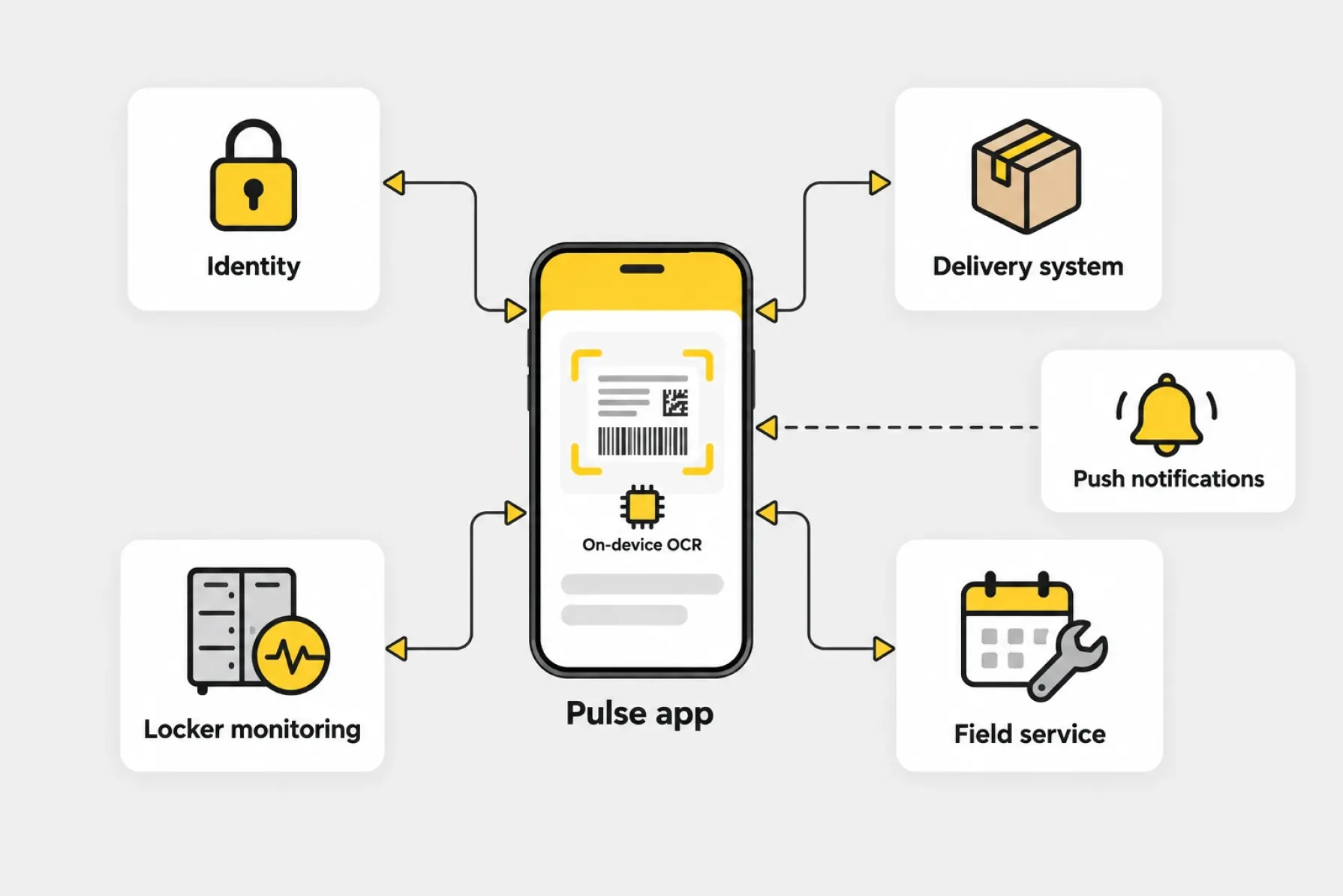
Pulse and TMS (React Native, Expo, TypeScript, NestJS): The Pulse app for Luxer One’s location liaisons, built in React Native on Expo for iOS and Android, with Redux Toolkit and React Query for session and server data. It uses the camera to capture package labels and QR codes to check in at locations. Behind it, TMS (Territory Manager Service) is a NestJS REST API using Prisma on MySQL, connected to Luxer One’s main iLocker database. Firebase Realtime Database and Cloud Storage hold territories, check-ins and label photos, and sign-in runs through Luxer Identity with JWT-based access by role.
Cloud and DevOps (Google Cloud, Kubernetes, ArgoCD): DropLocker on GKE with GitLab CI and GitOps deploys through ArgoCD. App Engine, SWA and IVR ship as Docker images through GitLab CI, with GCP Pub/Sub for events and Secret Manager for secrets. TMS runs as a Docker image on Kubernetes through Luxer One’s shared GitLab pipeline, and the Pulse app is built natively with Xcode and Android Studio and published to the App Store and Google Play, with Snyk dependency scans in CI. Monitoring runs on Sentry, Prometheus, Grafana and Loki. The Sales Calculator runs on Google Compute Engine, deployed through GitHub Actions.
Sales Calculator and Kitting Calc (TypeScript, JavaScript, NestJS, Next.js): The web app for Luxer One’s sales team, with a NestJS backend on PostgreSQL and Redis queues, a Next.js front end with Tailwind and shadcn/ui, and Zoho CRM sync. Proposals and contracts are generated through Google Docs and Slides, and the Kitting Calc engine creates locker and room fulfillments in Zoho CRM automatically. It also reads installation-drawing PDFs with AI and has a built-in MCP server for opportunity, quote, proposal and contract data.
Support Workflow Automation and IVR (TypeScript, NestJS): The AI support agent and the phone voice stack, with YAML-defined conversation flows, an AI intent classifier, live-agent handoff with business-hours routing and CSAT surveys. Phone calls are handled through Asterisk, with noise removal and live speech recognition.
Ticket Boss (Python, FastAPI): The AI ticket classifier, which reads support tickets from Zoho Desk and sorts them using an OpenAI model, with live progress streaming to the screen as a batch runs, and a backfill option for historical tickets.
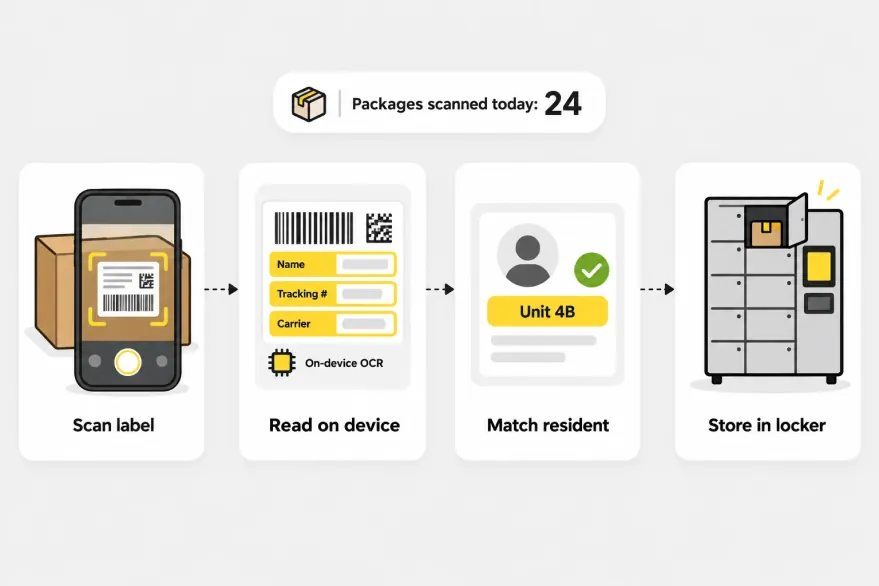
AI and voice models (Gemini, OpenAI, AssemblyAI, Google Cloud Text-to-Speech): Gemini and OpenAI behind a fallback chain for the support agent, Gemini for reading shipping labels in Pulse, OpenAI for classifying support tickets in Ticket Boss, OpenAI Realtime and AssemblyAI for live transcription, and Google Cloud Text-to-Speech for spoken replies.
Integrations: Harbor Lockers SDK and API, Luxer One iLocker API, Luxer Identity, Stripe, Twilio, SendGrid, Customer.io, Firebase, Google Maps, Google Workspace, Zoho CRM, Zoho FSM, Zoho Desk, Google Cloud Translation and Pub/Sub.
Industry:
Smart Lockers / Logistics / IoT
The largest locker network infrastructure
How is online shopping changing the way we handle packages?
As online shopping continues to grow, the need for smart lockers has skyrocketed, providing secure and convenient solutions for package management. Industries like e-commerce, retail, and logistics, including companies such as UPS, are seeing the benefits of these systems. The global smart locker market is expected to expand from USD 2.1 billion in 2023 to USD 3.6 billion by 2028, growing at a rate of 11.6% annually.
The Opportunity
In 2005, Arik Levy launched Laundry Locker, a locker-based delivery service for dry cleaning, quickly becoming San Francisco's largest with lockers in over 300 buildings.
In 2013, recognizing the challenge of secure package delivery to apartment buildings, he leveraged his expertise to found Luxer One, addressing this issue with innovative locker solutions.
Luxer One combined a comprehensive knowledge base in software, hardware, locker systems, delivery logistics, and property management to craft an intelligent package delivery solution, simplifying life for all stakeholders involved. Luxer One specializes in residential, commercial, and retail smart locker systems for package delivery and storage.
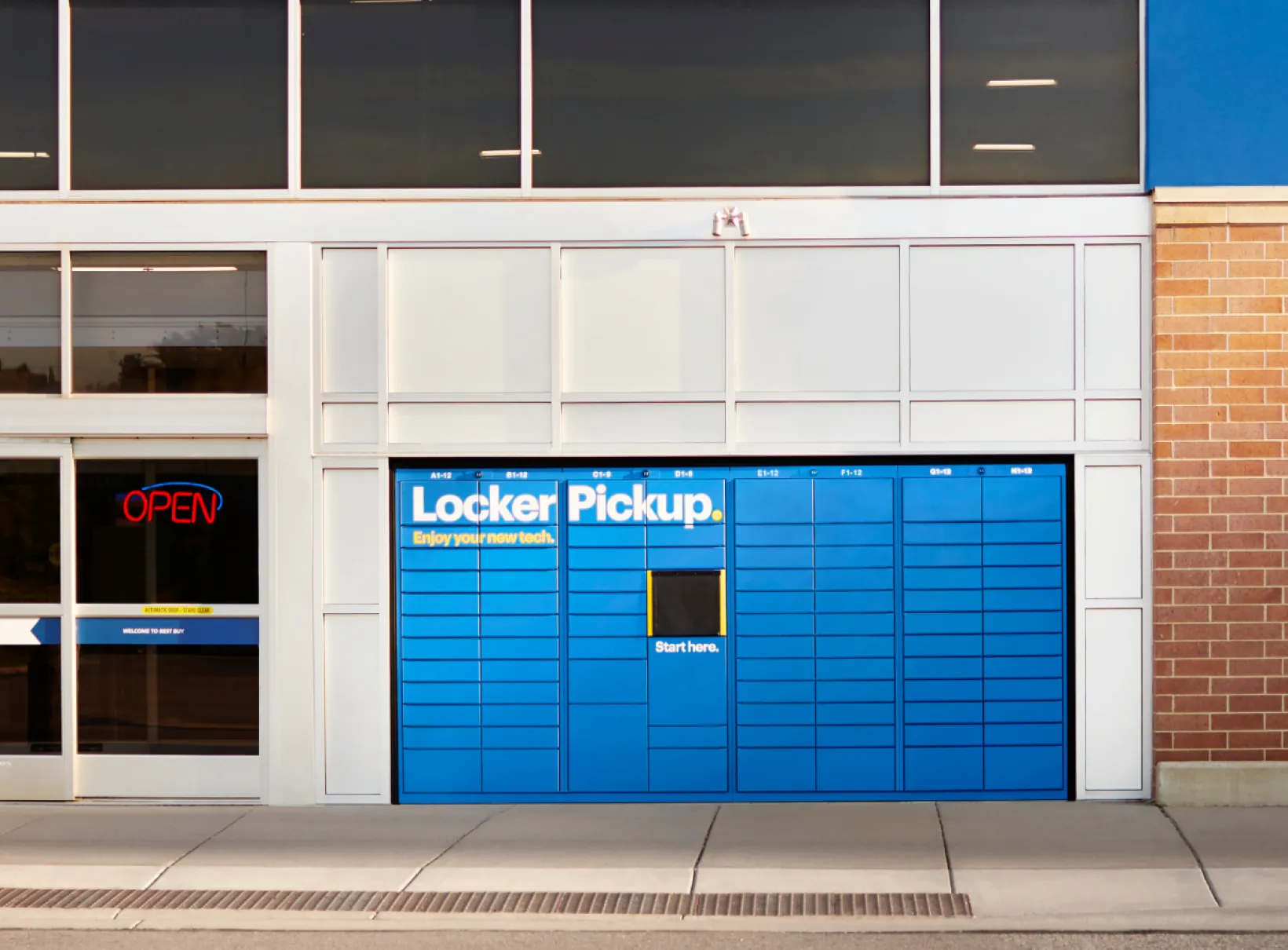
Luxer One’s lockers worked well for private spaces like residential and commercial properties, but the upfront cost of custom lockers, distribution, and software development kept many smaller e-commerce, retail, and logistics brands out. To close that gap, Luxer One launched Harbor Lockers, a division focused on public, open-access lockers for short-term, secure storage in busy places like retail centers, transit hubs, and city streets, built around everyday storage rather than parcel delivery.
In collaboration with Harbor Lockers, we’ve worked on ways to make onboarding easier for brands:
- A growing network of Harbor Public Lockers that lets brands run low-cost pilots.
- A generic white-label solution customizable to a brand’s requirements within just a week.
- A developer ecosystem to simplify app development using Harbor Connect, Harbor’s locker API and SDK.
- Strategic partnerships with development teams to support brands without in-house technical expertise.
The Audience
Luxer One and Harbor Lockers serve a mix of businesses and everyday users.
1. Businesses (B2B Segment)
- E-commerce Companies: These businesses need secure last-mile delivery solutions to improve customer satisfaction.
- Retail Chains and Malls: Multiple use-cases for retail stores, right from securing inventory to click-and-collect option for customers.
- Residential Property Managers and Real Estate Companies: Apartment complexes use Luxer One lockers to manage package deliveries for tenants securely.
- Corporate Offices, Workplaces and Universities: Offices use lockers for internal deliveries or employee convenience, and universities use them to handle packages for students and staff.
- Logistics and Courier Companies: These businesses use Luxer One and Harbor lockers as drop-off and pick-up hubs for packages.
- Brands and Developers: Companies without their own locker hardware use Harbor Public Lockers and Harbor Connect, the locker API and SDK, to run pilots and build apps for things like returns, food pickup, and bag storage.
- Luxer One’s Own Teams: Sales reps, technicians, liaisons and support agents use the Sales Calculator, Pulse, SWA and Ticket Boss.
2. End-Users (B2C Segment):
- Urban Consumers: Busy individuals who value secure and flexible delivery options.
- Online Shoppers: People who prefer contactless, self-service pickup options for online orders.
- Event-Goers: People who need a safe place for bags and belongings at venues with bag policies.
Our Contribution
We’ve worked with Luxer One and Harbor Lockers since 2022, across mobile, web, IoT and AI. The work falls into five areas:
- Testing new uses for lockers
- Helping brands get started on Harbor
- The DropLocker App
- Tools for Luxer One’s own teams
- AI for customer support
1. Testing new uses for lockers
Proving it works
We started by testing whether the Harbor Lockers SDK could run inside an iOS App Clip, so people could open a locker without downloading an app. For this we conducted initial proof-of-concept and feasibility tests.
A retail pilot built in weeks
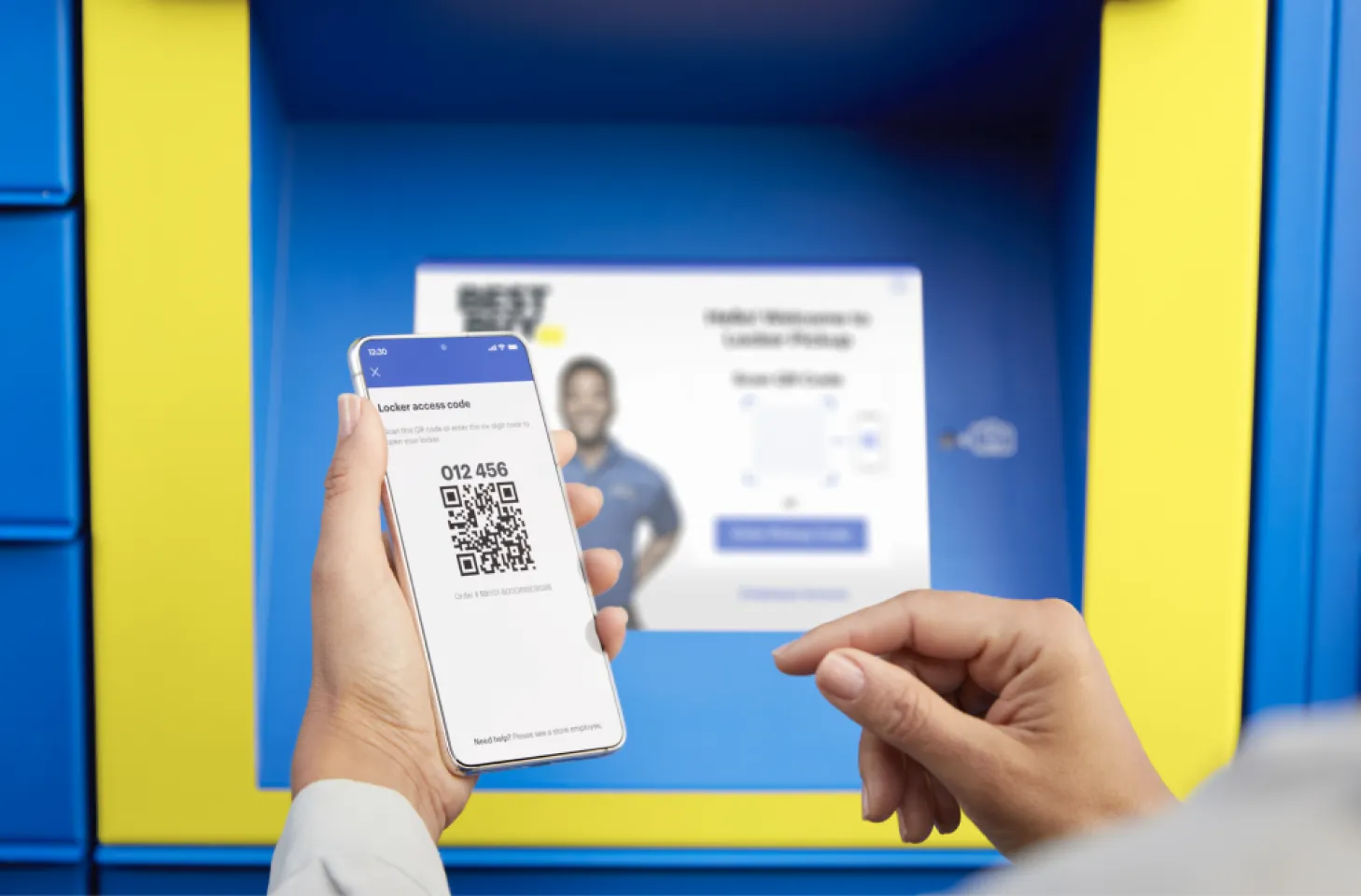
Roro Solutions teamed up with Luxer One on a pilot for one of the top three U.S. retailers to tackle shoplifting, especially in California, where theft under $950 is treated as a misdemeanor. To protect high-value products, the retailer kept them in locked compartments that store assistants had to unlock manually with a key, a slow and cumbersome process. Luxer One proposed a tech-driven solution, and Roro quickly built a prototype in just 3 to 4 weeks. The app lets customers scan a QR code near the locked products, which alerts the store manager, who can verify the request via video surveillance. The compartments can then be unlocked remotely through the smart locker network or manually by a store assistant.
UPS: a C2B solution
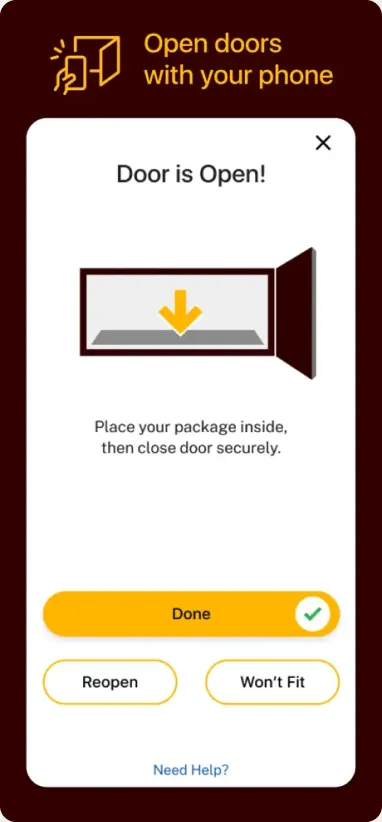
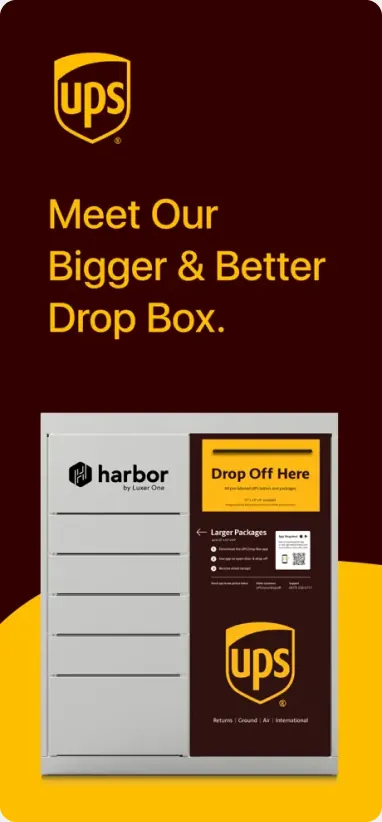
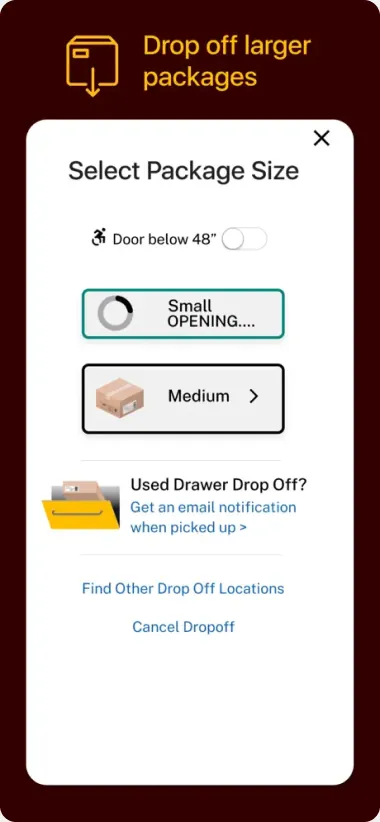
For UPS, we built a C2B solution: an admin panel, a customer app, a driver app, and an App Clip that simplifies drop-off.
A demo for TechCrunch Disrupt
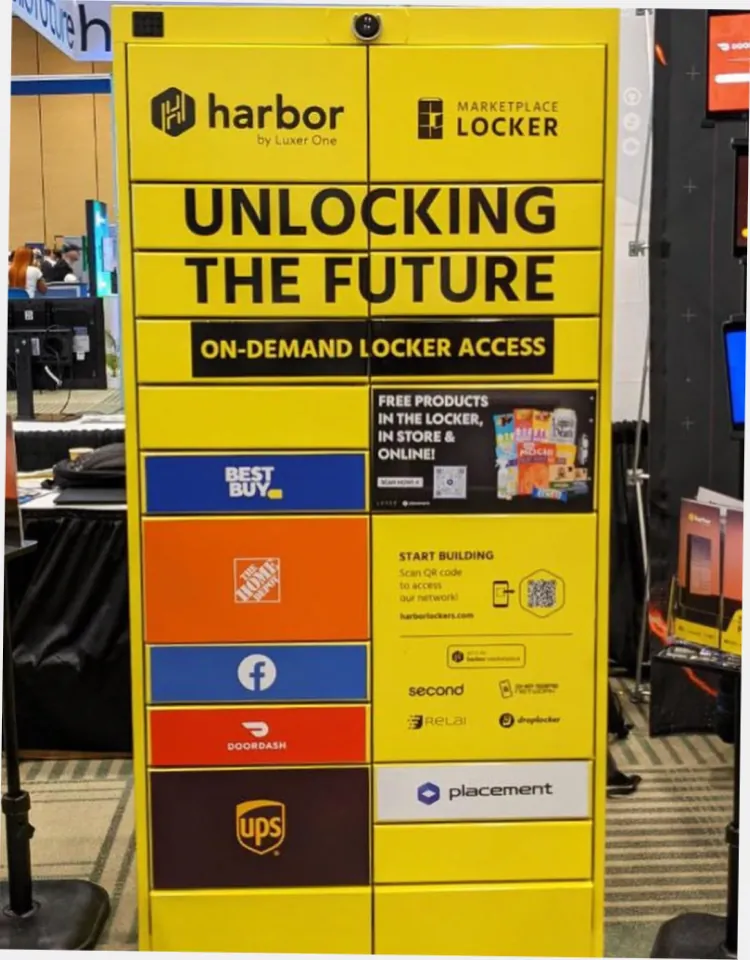
We built a demo app for TechCrunch Disrupt, where Harbor set up a custom drawer of lockers branded with company logos. Selecting DoorDash in the app, for example, unlocked the DoorDash-branded locker.
2. Helping brands get started on Harbor
Prototypes brands can click through
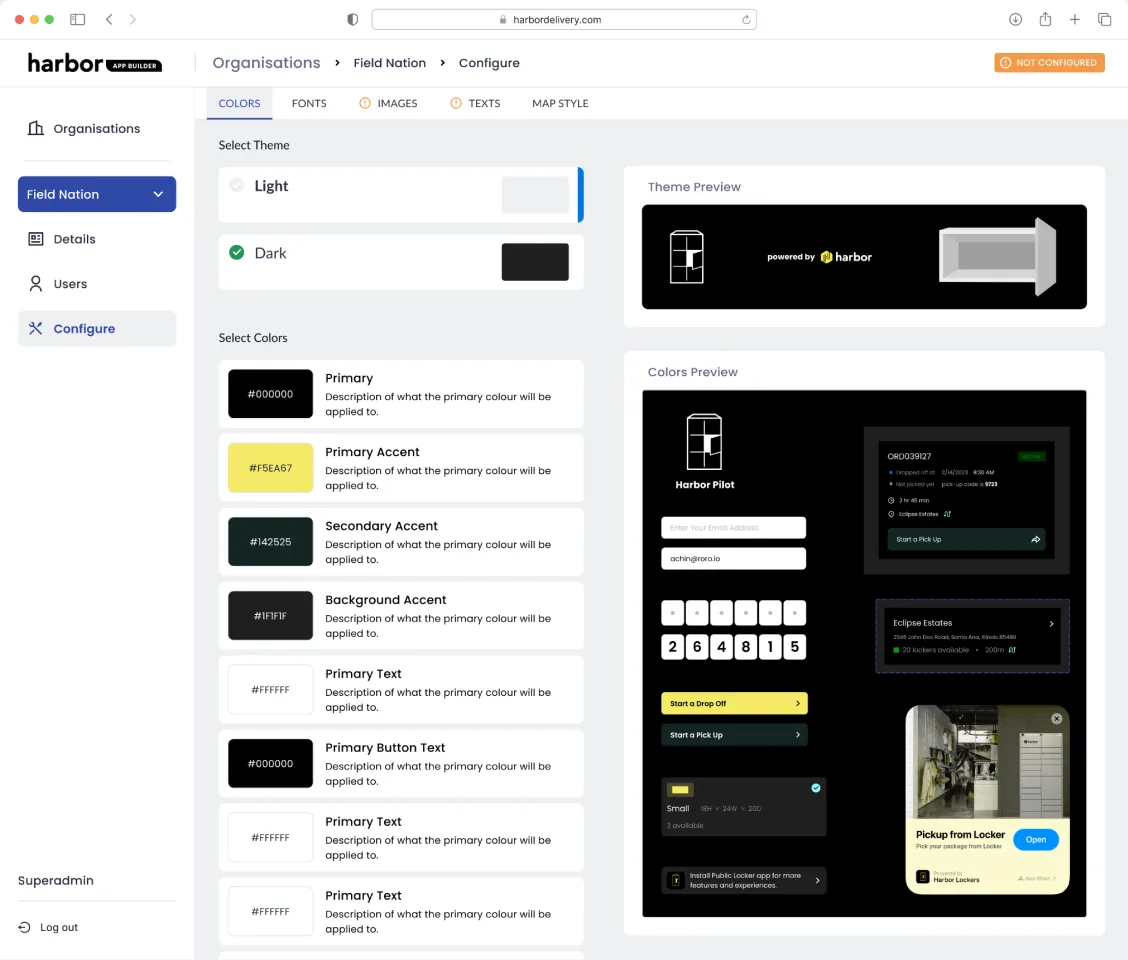
To speed up prototyping, we built a configurable Figma board and a white-labeled solution, the Harbor App Builder, that works with Harbor Public Lockers. Brands can click through it as a prototype and explore the solution before committing to full development.
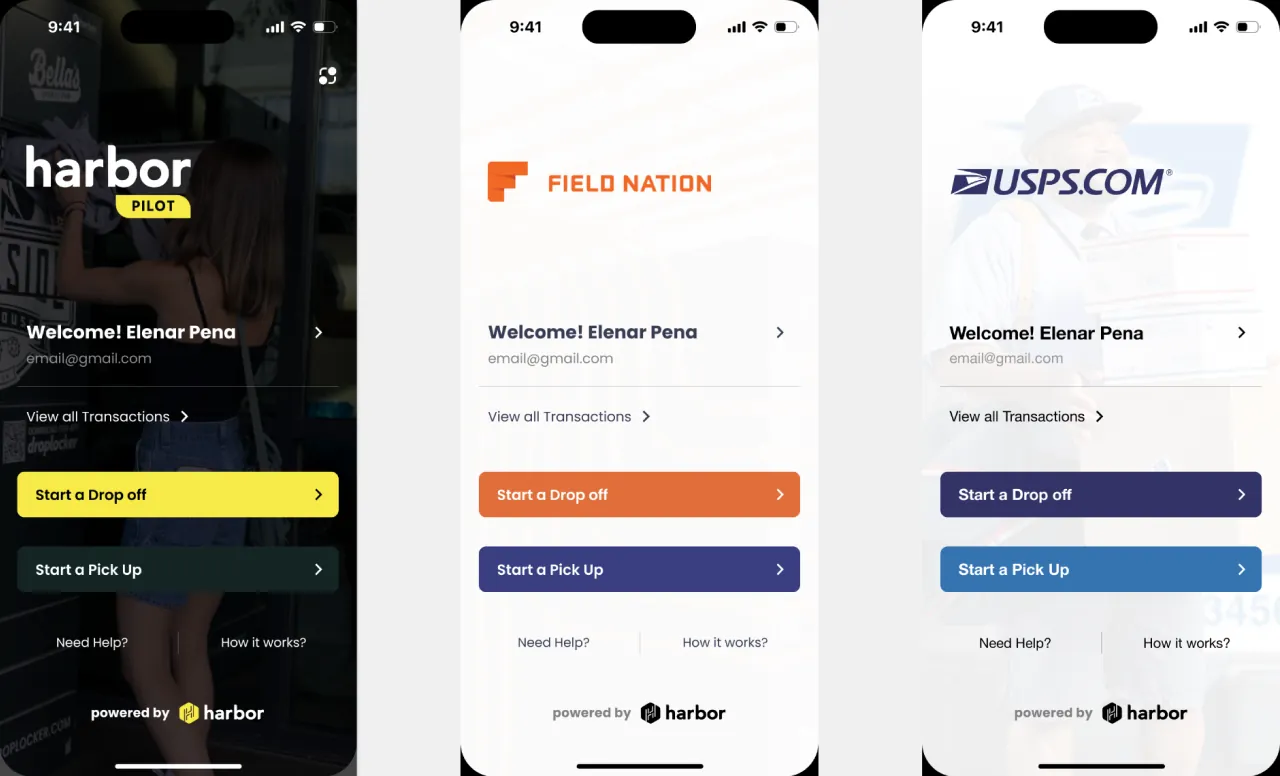
Mapping where lockers fit
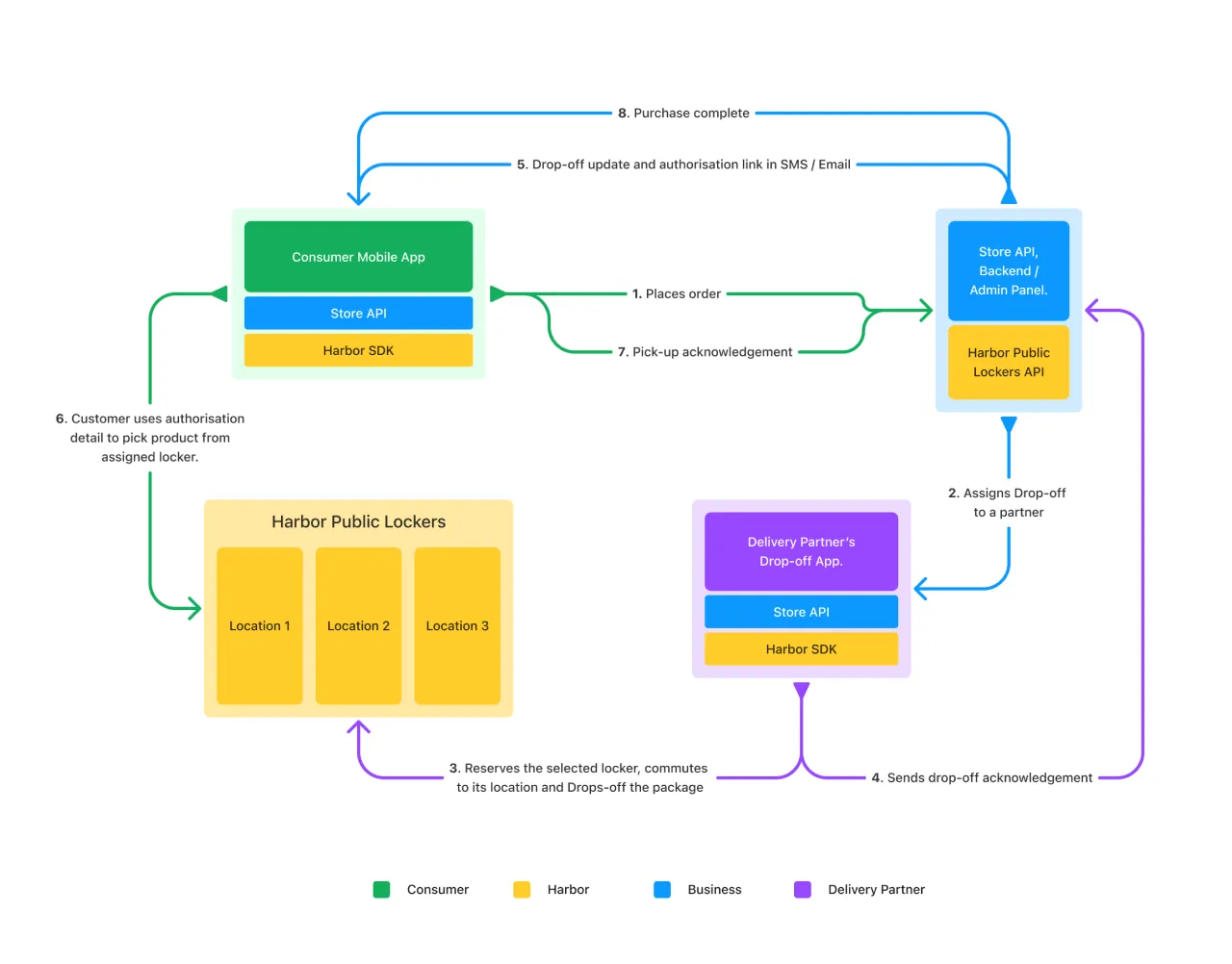
We ran a Figma-based flowchart project with Harbor’s VP of Product, a joint exercise between our UI/UX design team and Harbor. The goal was to work out how Harbor Lockers could serve different businesses, sectors, and industries, mapping the flow between Harbor Lockers, a client’s backend, and business users. The sessions visualized different business models and led to the Harbor Pilot.
Harbor App Engine
We built the App Engine as a full stack. The Guest Rental app, built in React Native and TypeScript for iOS and Android with an iOS App Clip, opens Harbor lockers through the Harbor Lockers SDK and Bluetooth Low Energy. It also handles QR and barcode scanning, maps, and Stripe payments. Behind it sits a Python and FastAPI backend on PostgreSQL with PostGIS for location data. A Next.js web portal gives super admins, organizations and sub-organizations role-based access, with Stripe transactions and payouts and Excel import and export.
ClearCaptions
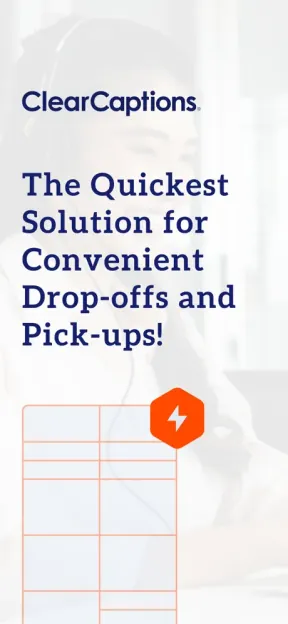
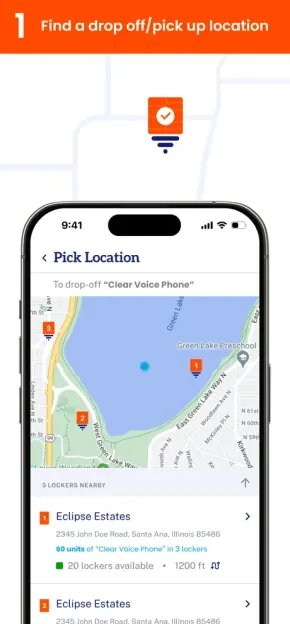
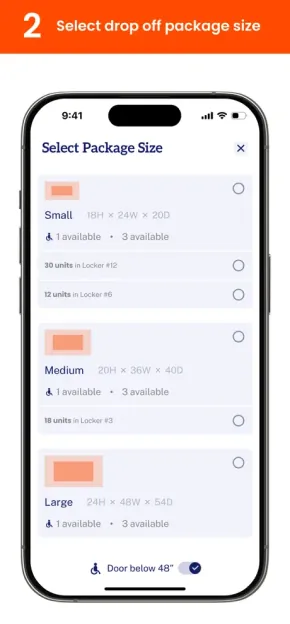
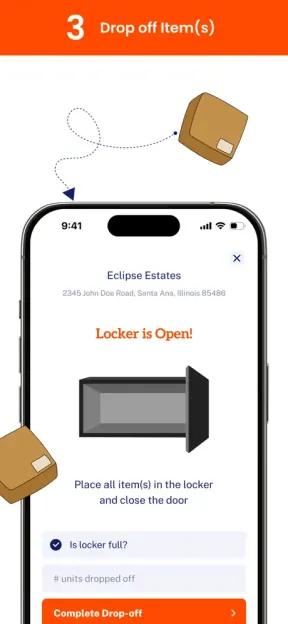
ClearCaptions provides phone captioning services to ensure you never miss a word during life’s important moments, all at no cost to you. To manage their product inventory, they rely on Harbor Lockers, where employees can conveniently drop off and pick up equipment while the system seamlessly tracks and organizes inventory in real time.
Soles4Souls
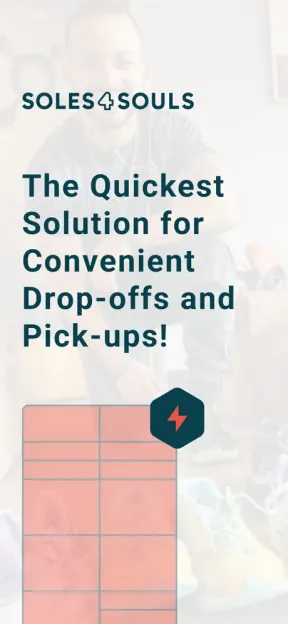
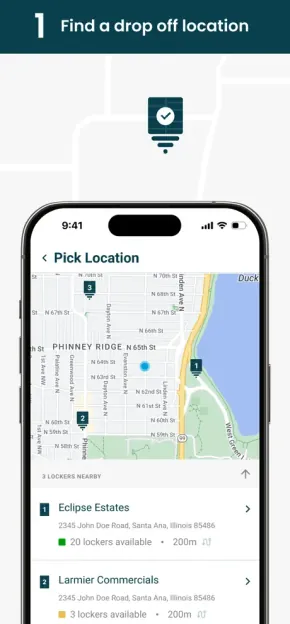
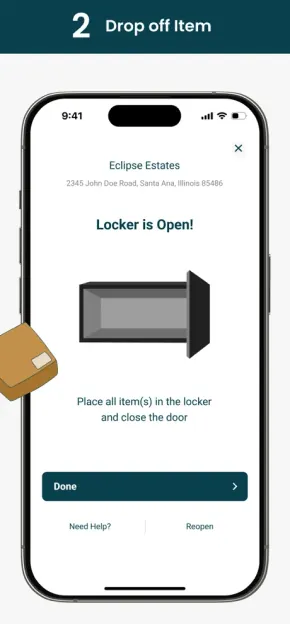
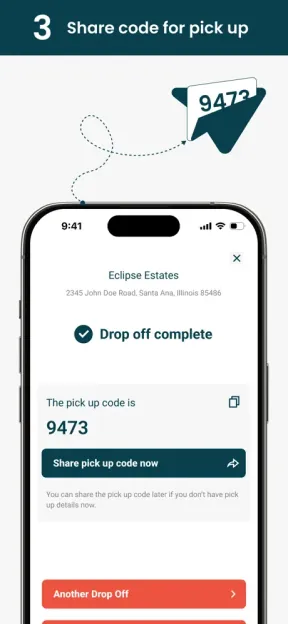
Soles4Souls turns unwanted shoes and clothing into opportunities, repurposing them to provide relief, create jobs, and help people break the cycle of poverty. We developed a custom app for Soles4Souls, integrated with the Harbor Lockers network, so users can drop off and pick up shoes for those in need.
3. The DropLocker app
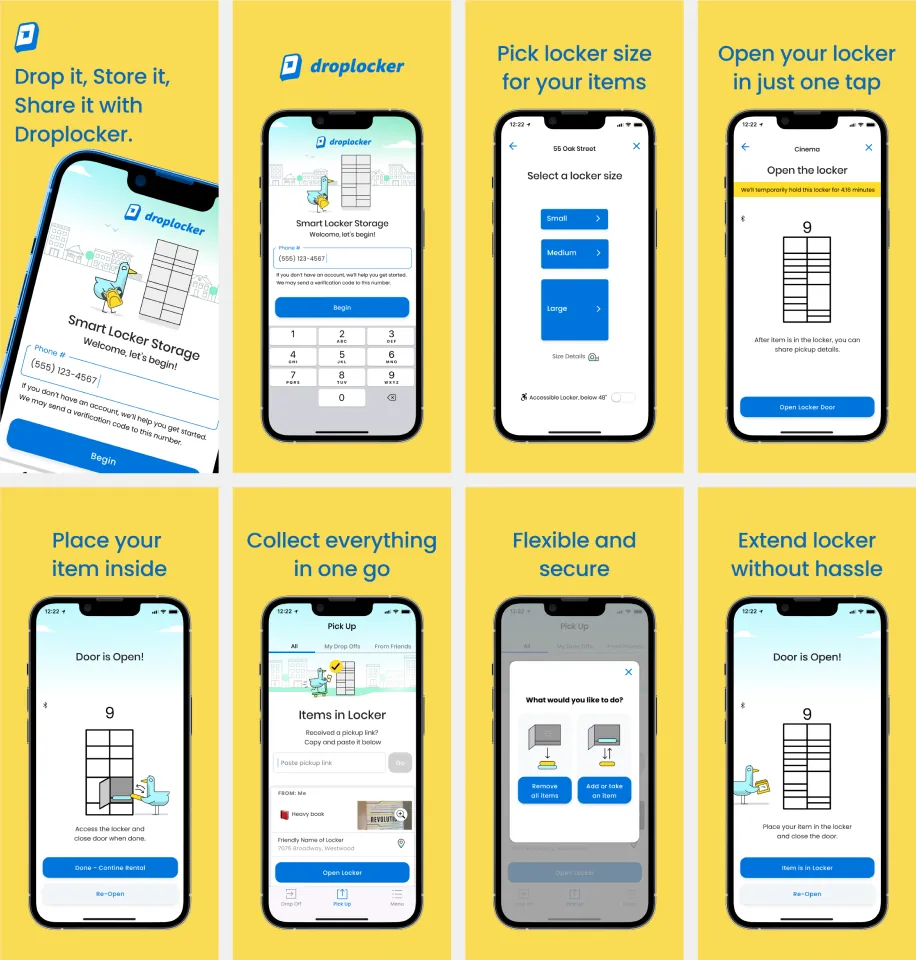
After several pilot projects, our partnership grew to include DropLocker, a temporary storage service powered by Luxer One. Anyone attending an event or venue can drop off any item in a locker, which helps in venues where bag policies restrict what people can bring in.
The DropLocker app, built in React Native and TypeScript for iOS and Android, lets anyone with a phone open Luxer One’s lockers through the Harbor Lockers SDK and Bluetooth Low Energy, with instant access to any locker on the network. The DropLocker team and location hosts can request more lockers as demand grows, which supported rapid expansion and wide adoption. We stabilized the app, one codebase running on both platforms, and shipped the production iOS App Clip, so users can drop off an item without installing the app at all.
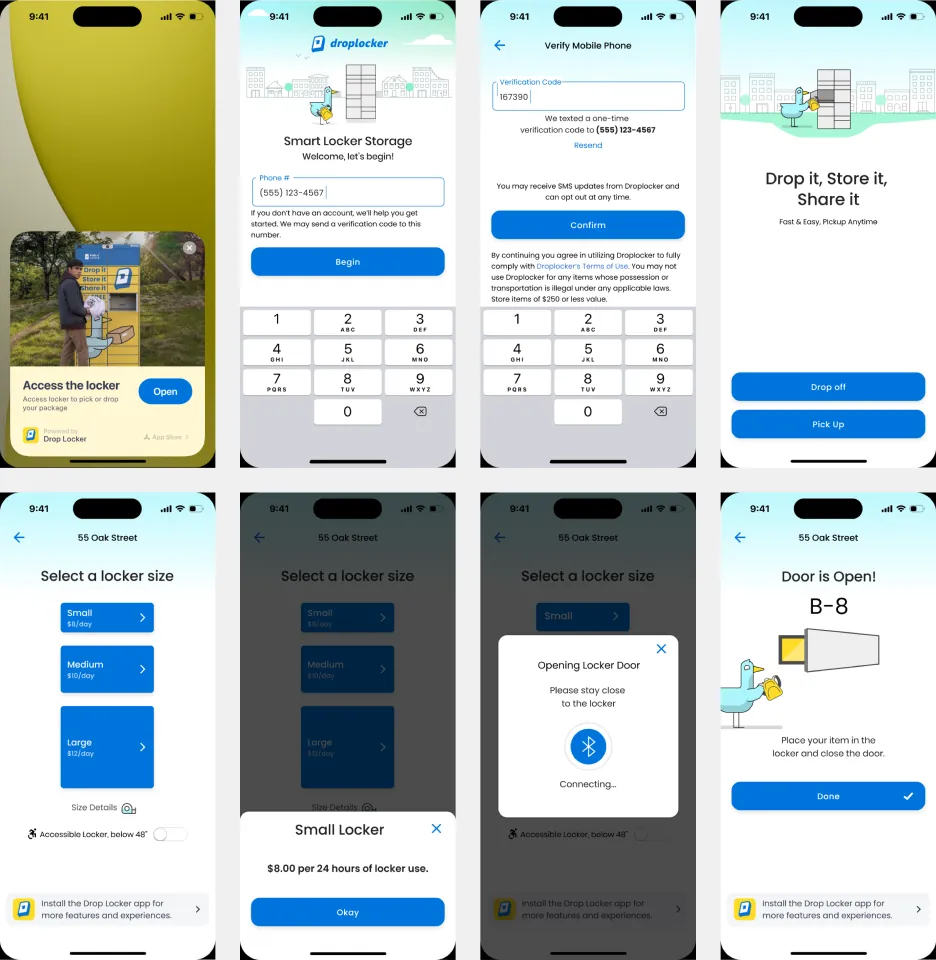
App Clip flow for Locker Dropoff:
- NFC Tap, QR code scan, or link access
- Phone Number and OTP Verification
- Choose Dropoff option
- Locker Selection
- Complete Dropoff
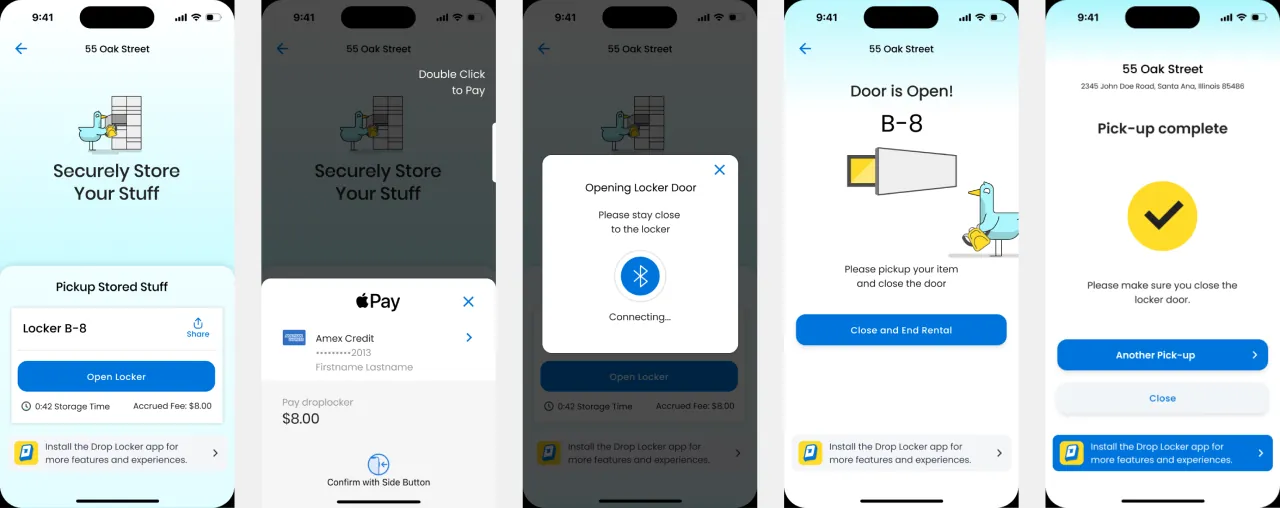
App Clip flow for Locker Pickup:
- NFC Tap, QR code scan, or link access
- Phone Number and OTP Verification
- Choose Pickup option
- Open Door
- Additional Options and Payment
Host Mode
We built a full Host/Liaison persona for DropLocker, giving hosts tower management, open-locker actions with reason logging, and admin-side review of host logs in the react-admin panel, along with French and Spanish translations.
Payments and security
We rewrote the payments stack: multi-day rentals with duration-based pricing and session expiry, CAD currency rolled out end to end for Canadian locations, and a rebuilt Stripe flow, with the Stripe React Native SDK and Apple Pay on the app side, coupon codes, authorize-and-capture, a per-location payment-upfront toggle, and Stripe receipts. To guard against signup fraud, we hardened sign-in with Twilio Verify, WhatsApp OTP, native iOS App Attest and Android Play Integrity modules, Cloudflare Turnstile, and Redis-backed rate limiting.
Behind the app
Behind the app sits a Python and FastAPI backend with PostgreSQL on Google Cloud SQL, and Redis for rate limiting and background jobs run through Dramatiq. A React admin panel built on react-admin covers the admin side. Everything runs on Google Kubernetes Engine and deploys through GitLab CI and ArgoCD, with Prometheus, Grafana, Loki and Sentry keeping an eye on it.
4. Tools for Luxer One's own teams
Sales Calculator
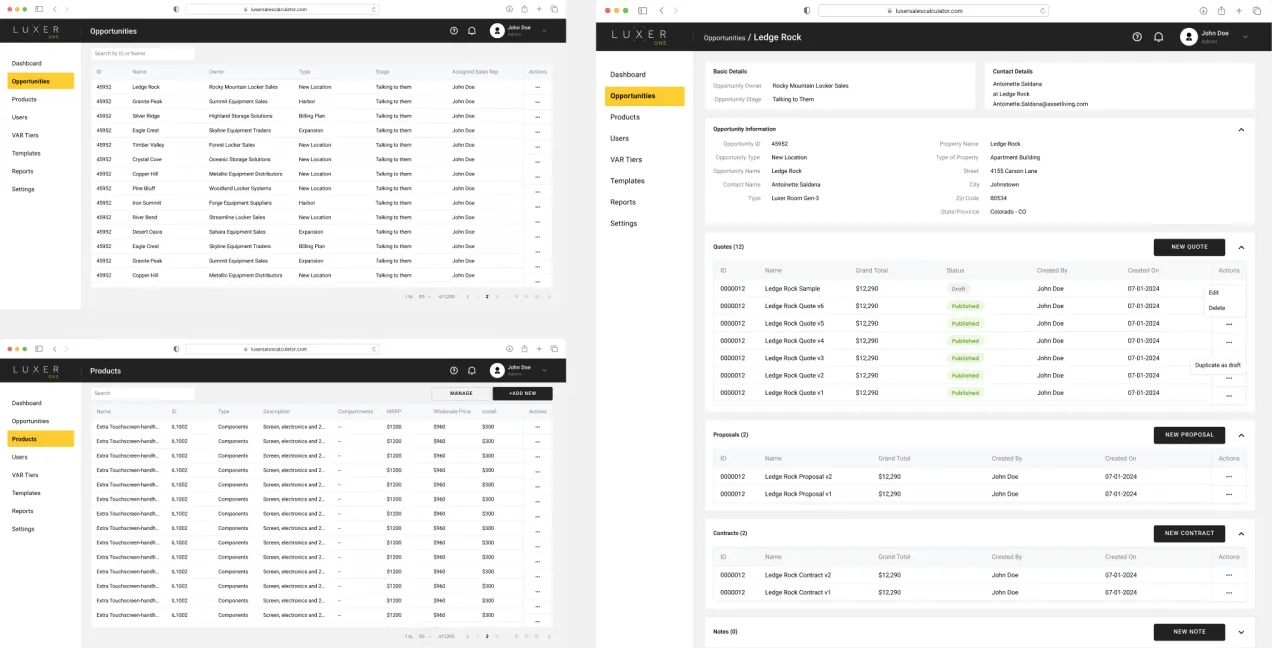
The Luxer One team needed a centralized system for generating quotes, sending contracts, and tracking opportunities. To keep everything in one place, we built the Sales Calculator, a unified tool for their sales staff.
The Sales Calculator is a web application, built with Next.js and React on the front end and a TypeScript and NestJS backend, integrated with Zoho CRM. It pulls opportunities from the CRM, maps relevant products, generates quotes, and creates proposals and contracts as Google Slides and Docs in a shared drive, then pushes updated quote information back to those opportunities in real time. Working inside the backend is the Kitting Calculator, an internal engine that automatically creates locker and room fulfillments in Zoho CRM. Project managers complete a simple form, and the fulfillment is generated instantly instead of the logistics team building it manually. Sales teams sign in with their Zoho accounts, and each role sees the screens it needs. Product lists can be edited in bulk through CSV, emails go out through SendGrid, and short tutorial videos help new users find their way around. Background jobs handle Zoho syncing, document generation and email.
Two AI additions sit on top. The calculator uses OpenAI to read installation-drawing PDFs and pull out the floor plan, and a built-in MCP server lets AI assistants look up opportunities, quotes, proposals and contracts directly.
It’s used by value-added resellers, Luxer sales representatives, top management, and Regional Distribution Sales Managers (RDS). Key technologies and services delivered: product definition, frontend development, backend development, UI/UX design.
Pulse App
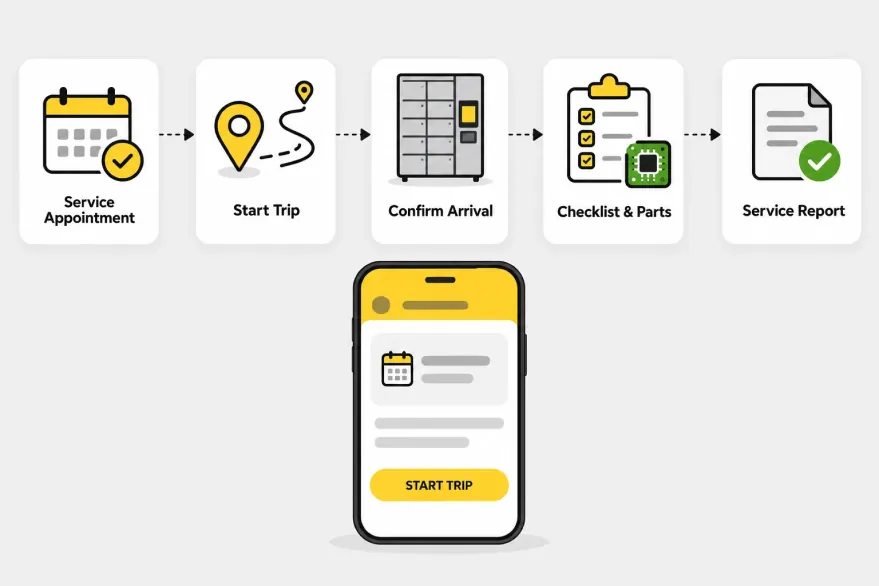
Our latest initiative is Pulse, a next-generation field service mobile app for Luxer’s technicians and liaisons, covering appointment and work-order workflows, shift tracking, and locker operations. Liaisons can photograph a package label and have AI read the resident name, carrier and tracking number, then check in at locations by scanning a QR code. We’ve built out the mobile experience and the test and analytics foundation, with live Zoho FSM integration and push notifications in active development.
5. AI for customer support
Support Workflow Automation
Our partnership has also grown into AI. We built Support Workflow Automation, or SWA, a customer facing AI agent, written in TypeScript on NestJS, that understands freeform conversations, figures out what a customer is trying to do, and triggers the right support flow automatically. Underneath SWA sits an Intent Classifier that maps messages to the right support intent and can reclassify mid conversation, a Fuzzy Interpreter that understands natural confirmations like yes and no answers, phone numbers and email addresses, and an Agentic Flow Interpreter built around a Gemini tool calling loop that reads the live conversation, tracks where the customer is in a workflow defined in YAML, and calls the right actions. Requests run through a fallback chain across Gemini and OpenAI, so the conversation keeps going if a provider is slow. SWA also connects to Luxer One’s own services for residents, lockers, access codes and package holds, works with Zoho CRM, hands off to a live agent during business hours, and sends a CSAT survey at the end.
A voice for support calls (IVR)
We extended the same intelligence into voice, building an IVR stack, also in TypeScript on NestJS, that answers calls through Asterisk. Caller audio goes through RNNoise noise removal and speech detection into live speech recognition through OpenAI Realtime, with AssemblyAI available as a switchable alternative, and replies are spoken back through Google Cloud Text-to-Speech, so the system can understand live callers and hold a natural conversation instead of a press 1, press 2 menu. Each caller turn is passed to SWA, so voice and text share the same support workflows. It also supports automatic language detection and Spanish to English translation through Google Cloud Translation, so those workflows work across languages.
Ticket Boss
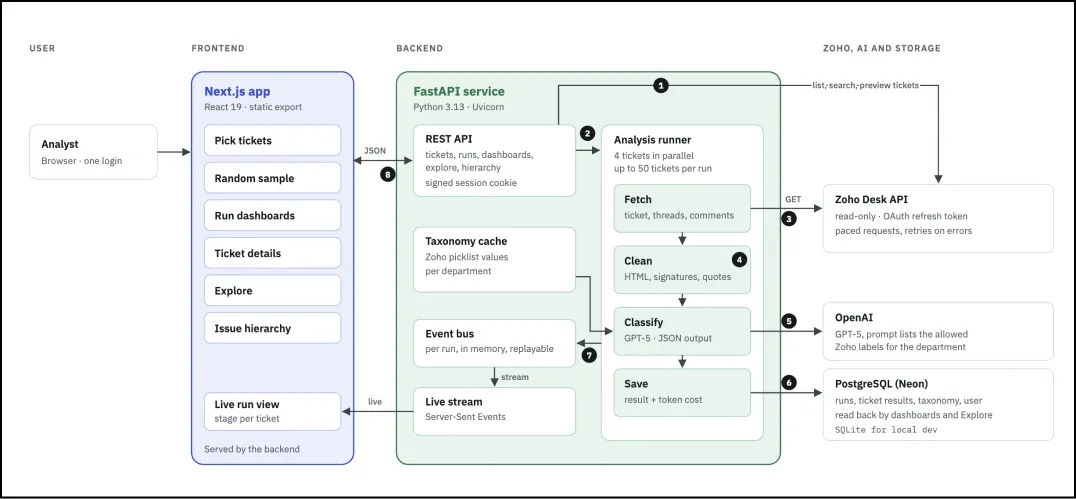
To help Luxer One’s support team keep up with incoming tickets, we built Ticket Boss, an AI ticket classifier. It reads each ticket and its conversation from Zoho Desk through a read-only connection, cleans up the email threads, and asks an OpenAI model to classify the ticket using the categories already defined in Zoho Desk, so the labels match the values the team already uses. Progress streams live to the screen while a batch runs, and every classification has its cost tracked. Ticket Boss can also work back through historical tickets, so the team can sort its back catalogue as well as new requests. It’s a Python and FastAPI service built to run alongside Luxer One’s other AI work.
The Impact
The solutions developed by Roro Solutions for Luxer One delivered measurable results that transformed their operations and customer experience:
- 20% Reduction in Customer Acquisition Costs: Our solutions helped Luxer One attract and retain customers more efficiently, significantly lowering acquisition costs.
- 40% Increase in Customer Satisfaction: The introduction of App Clips across multiple applications simplified user interactions, resulting in a substantial boost in customer satisfaction ratings.
- Improved Net Promoter Score (NPS): With a leap from 55 to 70, the NPS improvement reflects enhanced customer loyalty and positive user experiences driven by our tailored solutions.
Our Partnership With Luxer One
We’ve been working with Luxer One and Harbor Lockers since 2022, and that speaks volumes about the kind of relationships we build: long-lasting and rooted in trust. Over the years, our partnership has been shaped by a deep understanding of both teams’ vision.
From building a white-labeled solution and a demo app for Harbor, to simplifying package management with the DropLocker app, strengthening the sales team with a custom-built Sales Calculator, building Pulse for the field teams, and adding AI-powered support and ticket classification, we’ve kept pushing what’s possible in locker tech.
Here’s what Van Tucker has to say about our partnership -

Roro combines deep technical skill with clear execution. Their engineers think like product builders, simplify complex problems, and consistently make our team faster. It feels like a true partnership.

Van Tucker
VP of Technology Partnerships
Luxer One